Thank you for Subscribing to Construction Business Review Weekly Brief

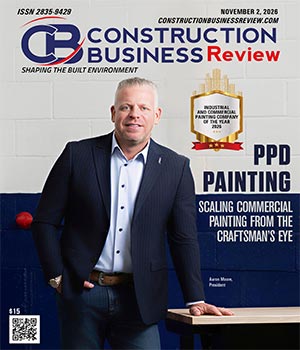
Aaron Moore started PPD Painting in 2003 with a paintbrush in hand and the ambition to master the business from the field itself. He filled nail holes, prepared surfaces, taped, masked and painted, and later moved through estimating, accounting and customer service as the company grew. Each role gave him a different view of the business and, over time, a clearer sense of the difference between ‘what good really looks like’ and a paint job that simply pleases the eye when the coat dries. That experience shaped his understanding that the paint itself is only part of the equation. “You have to know how the property works from the schedule and the access to who’s using the space, how much downtime they can live with and what the day-to-day reality looks like,” says Moore, president. “Even the most technically sound project may fall short if those factors are overlooked.” More than two decades later, his field-earned perspective shapes PPD Painting’s approach that combines the eye of a craftsman with a contractor’s instincts for planning, communication and accountability to carry experienced judgment across larger, more complex projects.
Construction Demolition and Recycling
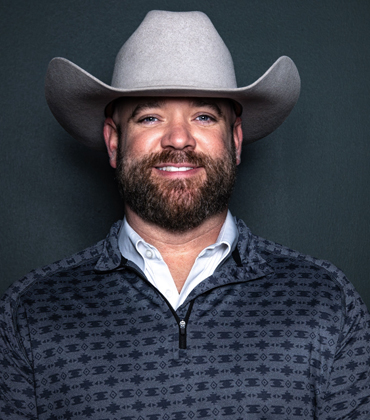
Some demolition projects leave little room for error. Occupied schools and churches, industrial manufacturing facilities, metal shops and airports can involve sensitive environments, structural separations or conditions that make the work particularly demanding. Crews need to carefully dismantle structures and coordinate their work with what is happening around them. Technical expertise matters, as does having a team that understands how its work affects the larger project. For Liberty Demolition, a Texas-based contractor specializing in selective, structural and technically complex projects, preparing its teams for these demands starts internally. It invests time in understanding what success means to each employee and works with them to build a path toward those goals. The effort reflects Liberty’s aim to create a ‘cultural mecca’ where people enjoy coming to work and carry that energy into client interactions. The culture is built around inspiration, positive impact, integrity, respect and helping others succeed. Those values shape how employees anticipate other trades’ needs and address potential issues. That employee mindset gives clients a demolition partner that acts as an extension of their team and keeps work coordinated and moving forward.
Scaffolding Contractors
Strickland Supplies
Personalized Solutions for Complex Construction
David L. Strickland II, President
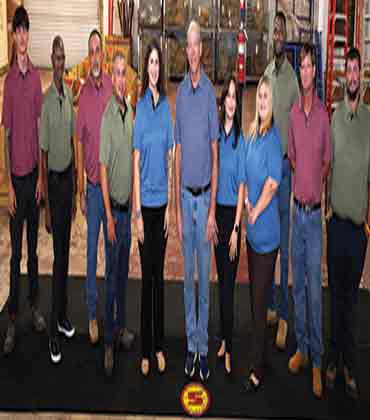
Construction projects rarely unfold under ideal conditions. Existing structures, constrained jobsites and accelerated schedules often require specialized scaffolding, shoring and temporary access systems. When conventional approaches are unable to address those demands, contractors seek out solutions engineered around the realities of the jobsite. Strickland Supplies has focused on solving such unique challenges since the Strickland family brought the company to Jacksonville in 1962. Through the rental and sale of masonry scaffolding, shoring systems, temporary construction access, trash chutes and pedestrian canopies, it supports projects of varying complexity. The real difference lies in the people behind those solutions who take time to understand each client’s specific requirements and recommend the most suitable solution. “Every project has its own challenges,” says David L. Strickland II, president. “Our job is to understand what the contractor is trying to accomplish and build the right solution around it.” Providing the right equipment is only one part of its role. Depending on the customer’s needs, the team coordinates engineering, delivers equipment, erects temporary systems and dismantles them after the project is complete. Working with one experienced team simplifies project execution from planning to completion. Inside Customized Project Solutions No two construction projects place the same demands. Some projects require only limited support, while others involve months of planning and coordination. Based on the scope of work, Strickland Supplies may assess the site, develop layouts, coordinate with third-party engineers to validate structural requirements, confirm that proposed systems can safely support anticipated loads and prepare engineered drawings before equipment is delivered and erected. Close collaboration with fabrication partners also enables Strickland Supplies to deliver solutions for applications that extend beyond standard inventory.
Roofing and Siding Systems
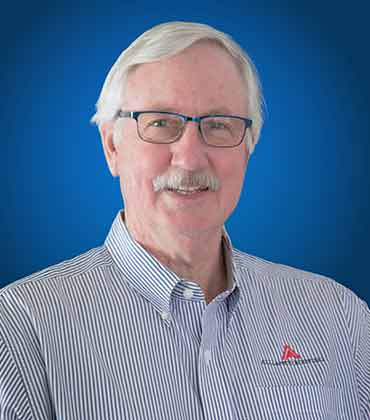
For ALLIANCE ROOFING COMPANY, Inc., completing a commercial roofing project is only the start. The real measure of success is earning the next call from the general contractor. That long-term focus informs how Alliance works by building relationships with its general contractor clients at every level from field teams and superintendents to project managers, preconstruction teams and senior executives. These connections create multiple levels of communication for addressing issues as they arise as well as opportunities for future collaboration. “Everything we do is built around relationships,” says Lon Hansen, vice president, marketing and business development. “Our motto is, ‘We don’t just want this project. We want the next 10 jobs.’” The relationship-driven approach starts well before a crew reaches the jobsite. During preconstruction, Alliance brings roofing and waterproofing expertise to product selection, installation methods as well as potential problem areas, allowing contractors and design teams make informed decisions early. While not a design-build firm, Alliance draws on its field and technical knowledge to guide project teams through complex decisions. Its services span commercial roofing, re-roofing, waterproofing, tenant improvements and ongoing services including 24-hour, 365-day leak response.
Modular and Prefab Construction

Custom modular construction has evolved well beyond the standardized designs once associated with factory-built housing. Advances in engineering, materials, finishes, and building performance are giving builders and developers greater flexibility while allowing volumetric modular fabrication to accommodate increasingly complex projects. Signature Building Systems has spent more than 30 years advancing that model, combining controlled off-site fabrication with the customization associated with conventional construction. From its facility in Moosic, Pennsylvania, the company fabricates modular components to the IRC and applicable state and local building codes, using a controlled factory environment to support quality, efficiency, and tighter building performance. “Modular is a construction method, not a type of home,” says Craig Landri, president. “We challenge preconceived notions of what’s possible with modular construction and work with our clients and design partners to achieve the architecture, quality, and schedule the project requires.”
Construction Hiring

Trends Impacting the Construction Industry
Pietro Da Sacco, Regional Engineering Manager West, Doka USA
Construction Interiors

Building Success Through Collaborative Execution
Jeremy M. Clayton, Director of Project Management, Ruppert Landscape
Construction Interiors
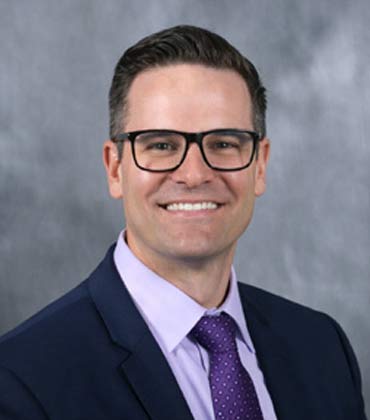
Delivering Construction Projects with Enduring Impact
Nick Groch, Director of Development and Construction, KPR Centers
Residential Construction

Leading with Communication, Accountability and Continuous Improvement in Maintenance Operations
Anthony Santoro, Director of Maintenance, Florida Realty Investments
Commercial Contractors
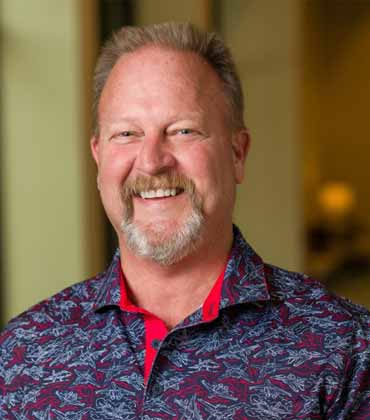
Delivering a Successful Project - It's All About the Team!
JP Page, Director, New Construction, The Exchange
Commercial Contractors
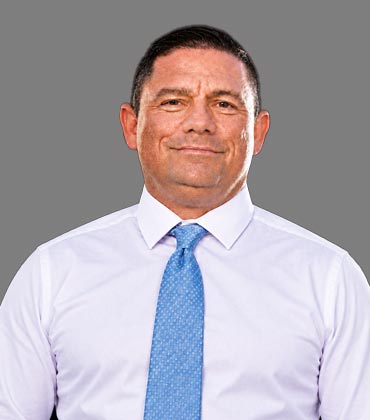
Leadership Begins with Caring
Joe Weathersby, Director, Transmission, Substation Maintenance & Construction, Arkansas Electric Cooperative Corporation
Architectural Glass

Closing the Information Gap in Data Center Construction
Manuel Davalos, Civil Engineering Construction Manager, Green Tanner Industrial Construction
Roofing and Siding Systems

Rethinking Rooftops: The Growing Role of Green Roofing In Sustainable Design
Meagan Kestler, Sales & Marketing Coordinator, Chatfield Green Roofing
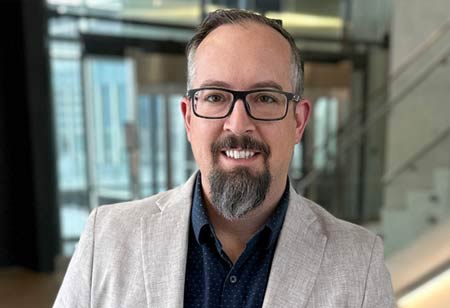
IN MY OPINION
Commercial Contractors
Building Stronger Teams For Complex Infrastructure
Scott Brazeau, P.Eng. G.S.C., Construction Manager, Kenaidan Contracting Ltd.

LAST WORD
Construction Engineering Services
Strengthening Safety Through Trust, Connection And Accountability
John Puzz, CSP, CHST, Corporate Safety Manager, County Materials Corporation
IN FOCUS

Commercial Roofing and Waterproofing: Driving Resilient Commercial Infrastructure
Commercial roofing and waterproofing services help enhance building protection, reduce maintenance costs and support greater operational continuity.

Industrial and Commercial Painting: Evolving Service Excellence and Regulatory Compliance
Industrial and commercial painting enhances asset protection, helps reduce maintenance costs and supports regulatory compliance.
EDITORIAL
Building Excellence Through Specialized Construction Expertise
The construction industry depends on specialized expertise, dependable execution and solutions that meet the demands of diverse projects. This edition of Construction Business Review highlights companies and industry leaders whose award categories reflect the breadth of capabilities shaping commercial buildings, residential construction and critical infrastructure.
PPD Painting is featured in the cover story as Industrial and Commercial Painting Company of the Year 2026, appreciating the value of commercial painting in the overall construction scene. This sub-sector ensures that focus is put into a trade that works on improving the appearance of commercial properties, where the skillful performance of the work is very important.
ALLIANCE ROOFING COMPANY, Inc., is recognized as Top Commercial Roofing and Waterproofing Contractor 2026 for keeping commercial buildings protected from leaks and weather damage. Liberty Demolition, named Top Building Demolition Services 2026, handles a different stage of construction, clearing existing structures and preparing sites for new projects.
Signature Building Systems, named Top Custom Modular Home Manufacturer 2026, showcases another way to build homes, bringing custom designs together with modular construction. Strickland Supplies, awarded Top Masonry Scaffold and Shoring Equipment Suppliers 2026, serves the crews who depend on reliable equipment to carry out masonry work safely and efficiently.
The issue also features Joe Weathersby, Director of Transmission, Substation Maintenance & Construction at Arkansas Electric Cooperative Corporation, and Manuel Davalos, Civil Engineering Construction Manager at Green Tanner Industrial Construction. Their experience adds perspectives on utility infrastructure and civil engineering, extending the discussion beyond individual building trades to the planning, coordination and technical expertise behind construction projects.
Together, the featured companies and industry leaders offer a closer look at the people, equipment and specialized skills that keep construction projects moving. Their stories give readers a broader understanding of the work happening across the industry and the expertise each area demands.
