Thank you for Subscribing to Construction Business Review Weekly Brief


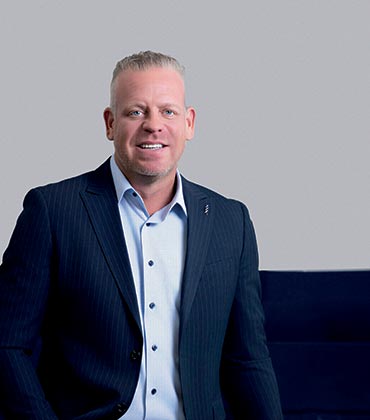 Aaron Moore, President
Each role gave him a different view of the business and, over time, a clearer sense of the difference between ‘what good really looks like’ and a paint job that simply pleases the eye when the coat dries. That experience shaped his understanding that the paint itself is only part of the equation.
“You have to know how the property works from the schedule and the access to who’s using the space, how much downtime they can live with and what the day-to-day reality looks like,” says Moore, president. “Even the most technically sound project may fall short if those factors are overlooked.”
More than two decades later, his field-earned perspective shapes PPD Painting’s approach that combines the eye of a craftsman with a contractor’s instincts for planning, communication and accountability to carry experienced judgment across larger, more complex projects.
That is where PPD Painting stands out. It approaches painting as part of asset preservation, considering not only how a coating performs but how the work affects operations, maintenance cycles and the owner’s longer-term investment.
 The model has facilitated its expansion across Chicago, Cincinnati, Indianapolis and parts of Montana. It now serves complex commercial and industrial environments ranging from manufacturing and distribution facilities to hospitality, healthcare, education, retail, financial institutions and multifamily communities.
“We’ve never tried to be the biggest painting contractor. We’ve focused on being the most trusted partner,” says Moore.
PPD Painting is built for consistency without reducing the work to a formula. Its systems create structure, but experienced people read the job, understand the variables and make the right calls.
Turning Experience into Capability
PPD Painting’s experience is not simply an individual strength. It is something developed and carried across the organization.
Recruitment is focused on experience and capability, with continued investment in training, safety and professional development. Specialized training events with third-party safety companies help ensure team members have the skills to perform each job safely and well. Many employees have remained with PPD Painting for nearly two decades, growing with the company and taking on larger responsibilities along the way. Their longevity has allowed field knowledge to stay within the organization and pass to newer generations as experienced employees move into supervisory, operational and market leadership roles.
We’ve never tried to be the biggest painting contractor. We’ve focused on being the most trusted partner.
PPD Painting’s people-first model works in both directions. Experienced employees are trusted and developed internally, while those same people are expected to listen closely enough to understand what the customer is actually trying to protect, avoid or accomplish.
A trust-and-track model reinforces this approach. Employees have the autonomy to perform their responsibilities, while systems provide visibility and accountability for the decisions they make. Clear scopes, project photographs, progress updates, documentation and communication between customers, field teams, project managers and billing create a connected operating structure.
That is what allows PPD Painting to grow without allowing scale to flatten the craft. Clients can expect the same standard of judgment even as the project, team or market changes.
Understanding the Property before Choosing the Solution
Selecting a coating system is one of the most fundamental decisions in a painting project. PPD Painting does not start with the product. It begins with the property. Surface conditions, environmental exposure, use patterns, aesthetic expectations, service-life requirements and financial parameters all influence what the right solution should be.
 For instance, a warehouse exposed to heavy traffic has different requirements than a hotel corridor. A manufacturing facility may prioritize durability and operational continuity, while a customer-facing retail or financial property may place greater emphasis on appearance. Multifamily properties add another layer, as the work has to account for residents as well as the physical condition of the buildings.
A higher-performing or more expensive coating is not automatically the better choice. PPD Painting looks at what the surface needs, how the space will be used and what the owner expects the system to accomplish over time. Its practical experience is supported by relationships with coating manufacturers and their technical teams, which help evaluate conditions and determine the appropriate system in specialized situations.
The same scope of planning goes into shaping how the work is carried out. A hotel may require overnight work, so guests are not inconvenienced. An industrial or distribution facility may need painting coordinated around production schedules, lift access and downtime. Offices and healthcare environments require careful attention to cleanliness, access and occupants, while multifamily and HOA projects demand communication with residents and sequencing across multiple buildings.
Even identifying second-shift work, weekend schedules, holiday shutdowns, phased execution, resident notifications, dust containment, odor management and coordination with facility managers is not something PPD Painting sees as basic logistical accommodation. These are the details that bring added value to its technical work.
-
We’ve always been willing to try the newest thing, and I think that it just continues to improve.
Even identifying second-shift work, weekend schedules, holiday shutdowns, phased execution, resident notifications, dust containment, odor management and coordination with facility managers is not something PPD Painting sees as basic logistical accommodation. These are the details that bring added value to its technical work.
One community repainting project illustrates the approach. Residents remained in their homes throughout the project while the work was underway. Instead of treating the project as a surface job, PPD Painting planned around occupied buildings, coordinated with property management, communicated clearly with residents, phased the work across different areas, accounted for weather and maintained quality control as crews moved through the community. In addition to producing a finished surface, it maintained safety, kept residents informed, limited inconvenience and stayed on schedule.
“We delivered a quality job, but at the same time, we completed the work in a way that kept residents informed, protected the site and minimized disruption,” says Moore.
Knowing how a property operates is one capability. Anticipating what could disrupt it and organizing the work around those risks is where PPD Painting turns careful planning into greater continuity and protection for the client.
Protecting What People Have Built
Much of PPD Painting’s work involves maintenance and repainting, giving it an opportunity to look at a property over a longer period rather than treating every engagement as an isolated job.
 That does not mean it automatically resorts to a complete repaint. It evaluates what actually requires attention and develops a plan around the asset’s longer-term requirements. Portfolio owners and associations benefit the most from replacing a large one-time capital spike with a five- or 10-year maintenance plan that keeps costs predictable while preventing surfaces from deteriorating to the point of complete replacement.
PPD Painting’s longer view of the property also changes the role maintenance plays. The objective is not simply to repaint a surface when it starts to look worn. It is to help owners protect the asset, control long-term costs and preserve the experience the property creates for the people who use it.
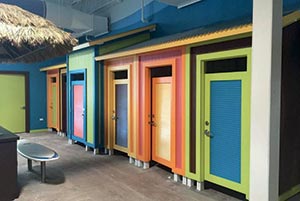
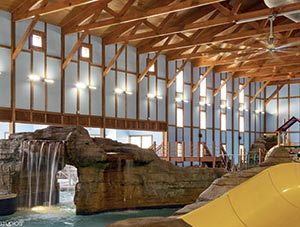 “Hotels, banks, schools, retail locations, offices and multifamily communities all say something through the way they look. Their condition shapes how customers, residents, employees and visitors experience the property and, in turn, the organization behind it. That’s part of what we’re trying to protect,” says Moore.
Growing the Judgment, Not Replacing It
As the painting industry changes, technology is becoming a key factor in how PPD Painting operates. Project information that once depended on paper records can now be accessed through cloud-based systems and mobile devices, supporting estimating, documentation, production tracking and communication.
PPD Painting is also leveraging AI in specification reading, planning, documentation and estimating. For Moore, its value is not in replacing experience but in helping experienced professionals work with more information and make better-informed decisions.
“We’ve always been willing to try the newest thing, and I think that it just continues to improve,” he says. “Contractors using AI and technology efficiently are going to outperform people who don’t.”
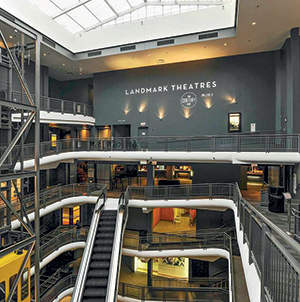 His instinct to keep moving with the industry has placed PPD Painting close to where change is happening. Manufacturers have involved the company in product demonstrations and prototype testing, exposing its teams to advances such as lower-VOC products, zero-VOC floor coatings and 100-percent-solids epoxy systems. Moore also stays abreast of the industry’s evolution through the Commercial Painting Industry Association, which he founded, and his publishing and podcasting work. New products and practices are not simply something PPD Painting adopts later. Its experience gives the company a way to judge early where those advances can genuinely improve the work.
PPD Painting’s next stage of growth involves exploring additional markets and expanding its existing scope, while staying true to its roots. This will allow people who develop expertise within the organization to take on larger responsibilities, build teams, and potentially lead new markets.
Recognized as the Industrial and Commercial Painting Company of the Year 2026, PPD Painting is building toward a future where growth does not come at the expense of craftsmanship and technology does not replace the judgment behind the work. The goal is to make that field-earned understanding part of every project, so every decision protects more than the finish. It protects the continuity, value and future of what the client has built.
