Thank you for Subscribing to Construction Business Review Weekly Brief


 Paul Kim, Founder and CEO
UIBS enters this complexity as more than a local intermediary. The real distinction is not broader involvement for its own sake, but broader accountability,” says Paul Kim, founder and CEO.
Its advantage lies in connecting decisions that other firms may handle separately. Since UIBS works across multiple parts of the project, it can see how a change in one area may affect cost, schedule or operations elsewhere, then respond before the issue grows into a larger disruption.
Bringing engineering, procurement, construction support and workforce resources under one roof also lets UIBS act directly on those issues. Whether the need is to find an alternative supply source, resolve a field constraint or close a labor gap, the client spends less time coordinating multiple providers, chasing updates or determining who is responsible for the next step. Instead, the client has one accountable partner who understands the wider project, mobilizes the right resources and keeps decisions moving without losing sight of cost, schedule or operational priorities. That role has defined UIBS since its founding in 2020, when it began serving international corporations entering the U.S., such as Samsung and LG and their affiliates.
The Real Distinction is not Broader Involvement For Its Own Sake, But Broader Accountability.
“Cross-border construction depends on more than speaking the same language. It requires both sides to work from the same technical and operational understanding,” says Paul Kim, “We bring the overseas client and U.S. contractors and field teams onto the same page, so requirements, decisions and execution stay aligned.”
One manufacturer experienced the value of that perspective through a multi-phase industrial manufacturing project.
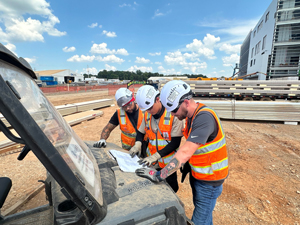 According to Kim, the project had encountered cost and schedule adjustments before UIBS became involved. Material sourcing presented challenges, while coordination between the overseas owner and U.S. contractors added complexity to decision-making and project execution.
When UIBS stepped in at a subsequent stage of the project, it addressed these challenges. The team understood where the required specialized construction materials were more readily available and focused on identifying alternative domestic supply sources by streamlining the sourcing process to improve procurement efficiency. More importantly, the company also became the working link between the owner and contractors, helping both sides understand requirements and resolve issues faster.
UIBS helped achieve meaningful cost savings and secured the certificate of occupancy three months ahead of the target date. More than a cost-and-schedule win, the project showed the value of having one partner with enough visibility and control to keep execution aligned across the wider project.
Keeping Change from Becoming Disruption
Industrial projects rarely go as planned. UIBS focuses on keeping inevitable changes from turning into larger disruptions.
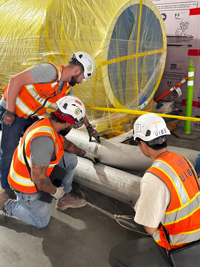 When a requirement shifts, the team looks beyond the immediate request to understand what else may move with it, from cost and schedule to constructability and future operations. They then document the change, coordinate approval and give the field team a clear path to execute it.
Sometimes the right response is not simply to accommodate the change, but to find a better way to meet the requirement altogether. That is where value engineering comes in. UIBS considers whether the same required performance can be achieved through a different material, sourcing route or execution approach that improves cost, availability, constructability, schedule or long-term operating efficiency.
Other situations require a more direct response. When workforce constraints affected a contractor’s ability to complete part of its scope on schedule, UIBS deployed its own personnel to help complete the remaining work. Material shortages have called for similar intervention. UIBS’s experience sourcing from Eastern Europe and East Asia gives projects another option when local supply cannot meet the required timeline.
Building With Operations in Mind
A plant can be finished on time and still leave the people running it with a lot to figure out. UIBS tries to make that transition easier by thinking about operations long before construction is complete.
A global battery-materials plant project in the U.S. shows that approach in practice. UIBS first studied the client’s earlier projects and benchmarked comparable plants. Its team then stayed close to the client throughout the project, asking a simple question at every stage, “What will the people operating this facility actually need once the doors open?”
-
Cross-border construction depends on more than speaking the same language. It requires both sides to work from the same technical and operational understanding.
“At the end of the day, they’re the ones who will be operating this plant,” says Kim. “We want to understand exactly what they need, how they need it and when they need it, so we can plan accordingly and execute.”
The same thinking carries into workforce planning. Large industrial projects can run for years, which means the people working on site get to know the facility as it comes together. They learned the layout, the equipment and the way the building works because they were there while it was being built.
When operations begin, UIBS can offer some of its workers for maintenance and other roles. The client doesn’t have to start from zero with people seeing the facility for the first time. Any knowledge gained during construction stays with the operation, making the handoff smoother and giving the plant a better-prepared workforce from day one.
Keeping the Owner Close and the Site Safe
Key executives may be thousands of miles from the site and, in many cases, may not come from a construction background. UIBS keeps them closely connected to what is happening on the ground through photographs with descriptions, drawings and 360-degree visual information, helping owners understand field conditions and stay involved in decisions without being physically present.
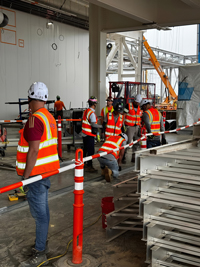 UIBS also makes sure its personnel assigned to the client’s project are properly prepared before entering the site. They first complete onboarding, followed by project-specific orientation and any additional safety requirements set by the general contractor or project owner. OSHA 10 training is done where applicable. Daily toolbox meetings and recurring job hazard analysis meetings also help keep job-specific risks and expectations clear throughout the project.
Safety communication continues as site conditions change. When a general contractor issues new instructions or requirements, UIBS’s safety manager organizes the information and communicates it clearly across language differences, so the guidance is understood and applied in the field. Internal managers also visit project sites daily to check conditions, speak with supervisors and personnel, and address issues before they affect safety or productivity.
The honesty and dedication UIBS brings to each project are clear in how it defines its own limits. If another contractor is better suited to a particular requirement, UIBS makes the referral rather than taking on work outside its strengths.
Showing that discipline day in and day out has moved the company closer to its larger goal of becoming a trusted U.S. execution partner for global industrial companies, with advanced manufacturing and semiconductor projects as natural areas of growth.
Today, Construction Business Review’s recognition of UIBS as a Top Construction Management Solutions Provider for 2026 is a reflection of its work in helping overseas manufacturers navigate U.S. construction through one accountable partner that connects people, resources, and decisions from planning through execution.
