
Thank you for Subscribing to Construction Business Review Weekly Brief

Aurecon
Nadeem Shakir, Technical Director and Head of Transport Planning
The Ticket to Super-Convenient Travelling
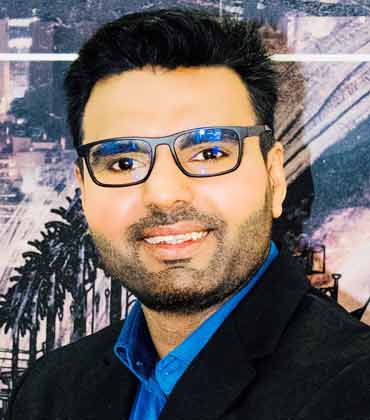
Nadeem Shakir
Smart and Digital Mobility is continuously bringing changes to the transport market. How do you see this market evolving in the near future?
Digital mobility is an advanced approach to enhance transport networks combined with the latest technology. Mobility has become a dominant source for revenue generation.
While the smart mobility market seems promising, a key factor influencing this market is the travel choices made by consumers. The changing mindset of millennials (who account for 1/3rd of the world’s population) is leading this shift from the conventional vehicle-centric system to a more efficient Smart and Shared Mobility ecosystem. Technological advancements are fully supporting this shift. New business models are emerging, and there will be a need to establish new institutional frameworks and regulatory policies as well as rethink the current financial models for revenue generation. The transport experts and decision-makers will have to work closely to evaluate the impact of this ecosystem in the long term to develop a Future-Ready Multimodal Transport Network for the cities.
In terms of commuters, Smart Mobility is offering more flexible and convenient ways to travel. Be it mobile navigation applications, automated public transport cards, smart signals, green traffic platoons, robotic parking, variable message signboards, etc., and these have become a part of our day-to-day smart travel.
What new transport modes will reshape travel within Middle eastern cities?
The Middle East is considered the hub of innovation. The disruption in the global transportation industry has provided this region an opportunity to leapfrog and tap into the smart mobility market. Examples in smart mobility trends of autonomous driving, connectivity, electrification, and shared mobility (ACES), in private and public transport modes are already present in the region. To quote an example, the Dubai Metro, which is driverless and automated, has been in operation since 2009.
As mass transit networks in the ME cities expand continuously, it will form the spine to attract the most advanced first and last-mile modes.
As mass transit networks in the ME cities expand continuously, it will form the spine to attract the most advanced first and last-mile modes. Transit on-demand/micro-transit solutions with flexible routing/scheduling will infiltrate further in the ME market. Autonomous people mover systems such as Group Rapid Transit (GRT) and Personal Rapid Transit (PRT) will play an important role in offering first and last-mile solutions. From a more technological advancement point of view, this region is expected to see further growth to promote innovative modes such as Skypods, Magnetic levitation (MAGLEV), Trackless ART’s, Flying Taxis, Hyperloop, etc.
There is too much global focus on micro-mobility. What is the future of micro-mobility in the Middle East?
Micro-mobility is considered as a low-cost alternative, particularly for first and last-mile commuting trips for the short-distance trip lengths; it encompasses travel including all trips by private bikes, scooters, or walking. Micro-mobility is also attractive as it requires low infrastructure cost and allows for a greater number of micro-vehicles to be deployed on the streets where consumers can easily use them. It is widely being viewed as a means to reduce the vehicle footprint and road congestion as it supplements ride-hailing and ride-sharing services as well as the existing public transport infrastructure.
The concept of shared micro-mobility is already very popular in the ME region. A recent announcement by RTA (Dubai) and Careem to operate 3500 bikes with 350 docking stations in two phases is clearly a big step to promote micro-mobility in the region. Extreme weather conditions in the region do bring some challenges. However, this can be easily countered by providing dedicated shaded routes. Developers in the region are extremely excited about this concept, and they have already started offering a future-ready environment to promote micro-mobility at the early planning stages.
Driverless transport is the most talked-about concept for future mobility. Are we ready for it?
The concept of driverless transport is not something that has evolved overnight. Experiments around this technology have been happening since the 1920s. However, only during the last few years have we seen significant progress in this space. Google under Alphabet operated the autonomous car prototype in 2015. In the same year, a 360-mile trip was completed in France by an autonomous car with no human assistance. Most of the modern mass rapid transit systems today are driverless. Masdar development in Abu Dhabi operates a driverless personalized rapid transit system. Many developers in the region are exploring future-ready driverless people mover systems. Hence, there is absolutely no question about the readiness of driverless transport from the technology point of view as it’s already happening.
Driverless technology has proven extremely successful in the dedicated environment. However, there are a few challenges when it comes to the interaction of driverless cars in the mixed environment, i.e., with other cars driven by humans. Efforts are being made to overcome these challenges with more controlled pilot tests happening worldwide, which, in turn. are helping the planners and technology providers to understand the problem and develop mitigation programs. Other challenges to the success of driverless transport and insurance, data sharing laws and privacy, budgeting and funding models, ethical intelligence include both robo-ethics (moral behavior of humans designing the programs) and machine ethics (response of driverless vehicles during emergencies).
The articles from these contributors are based on their personal expertise and viewpoints, and do not necessarily reflect the opinions of their employers or affiliated organizations.
