Thank you for Subscribing to Construction Business Review Weekly Brief

Wilco Construction
Steve Bolen, Director, Construction Excellence
Building the Discipline Behind Better Project Performance
Steve Bolen
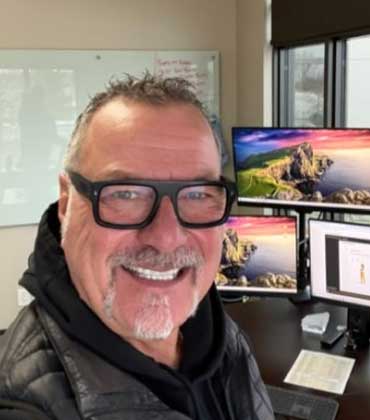
Steve Bolen brings more than four decades of hands-on and leadership experience to his role as Director of Construction Excellence at Wilco Construction. His career has taken him from operating heavy equipment to leading complex projects across North America and international markets, giving him a perspective shaped by both field experience and senior project leadership.
During 27 years with Kiewit, he progressed through increasingly senior roles and ultimately led a $1.5 billion oil sands project. He later built and led his own construction firm before moving into consulting and joining Parsons Engineering, where he worked on an LRT project in Edmonton. He went on to manage major construction work in Saudi Arabia and the Emirates, including civil infrastructure for NEOM’s The Line project, with responsibility for earthworks, dewatering and piling.
Learning That Shapes Better Leadership
A lot of how I approach construction today comes from the people who trained me along the way. My years with Kiewit were particularly formative. I had mentors right through to the executive level who pushed me to grow, gave me opportunities to take on different kinds of work and trusted me with increasingly larger responsibilities.
That experience taught me that leadership develops through exposure. You learn by taking on work that stretches you, then by learning from the people around you. I carried that perspective into every role that followed.
The lesson has stayed relevant because construction is still fundamentally a people business.
Starting with the Right People
Our most important asset is our people. That has always been true, but it matters even more in today’s market because fewer people are entering the industry and contractors are competing for the same talent.
Success starts with the leadership team driving the work in the field. You need people with the right skills and the right personalities for the responsibilities they carry. If you don’t start with the right people in the right seats, you can’t achieve your full potential.
Our most important asset is our people. If you don’t start with the right people in the right seats, you can’t achieve your full potential.
That thinking also shapes how I build teams. It starts with screening for people who can work well together and who want to grow. I also want diversity in the people we bring on board because different perspectives matter on a project.
Training then becomes a major part of the equation. I’ve brought many people into construction who were new to the industry, whether they were coming straight from university or entering as equipment operators. They need more than technical instruction. They need to understand how the company works and the culture they are expected to contribute to.
My own development was shaped in much the same way. As I came up through the ranks, I received a lot of training and clear direction from my supervisors. That experience taught me that communication is everything, but clear and concise communication matters most. There isn’t much room for ambiguity when you’re coordinating work in the field. When you’re giving someone an instruction or asking them to accomplish something, the message needs to be clearly articulated so the individual knows exactly what you’re looking for.
Getting the Work Right First
Construction excellence starts well before the work reaches the field. You have to get the preparation right first. If you don’t prepare a solid execution plan, you can’t build a schedule that gives you a meaningful way to track progress.
Quality has to be part of that preparation. Rework goes directly against the bottom line, but the cost isn’t limited to money. When people have to return to work they thought they had already completed, their focus can suffer. In my experience, incident and injury rates tend to rise when rework becomes a recurring part of a project.
Getting it right the first time protects more than the budget. It reduces unnecessary exposure for the people doing the work.
The same discipline applies to environmental requirements. Some projects demand careful controls when work takes place near water or in other sensitive environments. Those systems and procedures have to be established properly from the outset.
When those fundamentals are handled well, cost performance becomes much easier to manage, and the project is far more likely to finish within budget.
Bringing Technology into the Field
Technology is becoming a much bigger part of construction, and Wilco is well ahead of many companies in how it is using it.
One example is Nektar, a platform developed within Wilco that brings different parts of the business into one system. It supports functions ranging from scheduling to cost control while also incorporating asset management and payroll. The platform now operates as a standalone organization that Wilco is selling to other entities. AI is also becoming an important component of Nektar. Estimating is one area where AI is being integrated into the platform, and development is ongoing. A dedicated team of people and programmers works on Nektar every day, continuing to enhance its capabilities.
Drones are another practical application. We’re flying them over many of our sites on a daily basis. Some of our drones remain on site in dedicated hangars on top of field office trailers and can be operated remotely by pilots from our Edmonton head office.
Embracing Challenges to Build Experience
For anyone coming into construction, I’d say the best way to grow is to keep an open mind. Don’t be afraid to try something new, and don’t be afraid to make mistakes.
We’re all going to make mistakes. The bigger mistake is becoming so intimidated by the possibility of failure that you stop trying altogether.
I’d rather see someone try something and fail than never try at all. Every new experience adds to what you know, and the more disciplines you understand, the more valuable you become.
Construction gives people plenty of opportunities to learn. The important thing is to remain willing to take them.
The articles from these contributors are based on their personal expertise and viewpoints, and do not necessarily reflect the opinions of their employers or affiliated organizations.
