
CLOSE
  • Roofing and Siding Systems
  • Doors and windows
  • HVAC
  • Steel Building APAC
  • Kitchen and Bath Europe
  • Construction Interiors
  • Construction Demolition and Recycling Europe
  • Construction MENA
  • Architectural Glass
  • Modular and Prefab Construction
  • Construction Engineering Services
  • Safety and Compliance Europe
  • Wall Systems
  • Waterproofing APAC
  • Flooring System
  • Forensic and Owners Representative
  • Startups APAC
  • Architectural Glass APAC
  • Roofing and Siding Systems Europe
  • Mechanical Electrical and Plumbing
  • Construction Bidding and Auctions
  • Architecture and Design Services
  • Concretes, Aggregates and Materials
  • Safety and Compliance APAC
  • Construction Demolition and Recycling APAC
  • Steel Building Europe
  • Construction Consulting
  • Roofing Systems APAC
  • Workforce Management and Staffing
  • Construction Latam
  • Landscaping
  • Construction Marketing
  • Modular Construction APAC
  • Modular Construction Canada
  • Construction Engineering MENA
  • Swimming Pool Construction
  • Construction Engineering Canada
  • Specialty Construction
  • Commercial Contractors
  • Scaffolding Contractors
  • Building Restoration and Maintenance
  • Doors and Windows Canada
  • Sustainable Construction APAC
  • Construction Law
  • Architectural Glass Canada
  • Building Information Modeling APAC
  • Construction Staffing
  • Insulation, Coating and Waterproofing
  • Cold Storage Construction Canada
  • Construction Management Canada
  • Swimming Pool Construction Canada
  • Scaffolding Canada
  • Flooring System APAC
  • Pre-Construction Services
  • Construction Staffing Europe
  • Precast Concrete Europe
  • Cold Storage Construction APAC
  • Apartment and Condominium Contractors Canada
  • MEP Canada
  • Foundation Construction Canada
  • Outdoor Construction
  • Construction Law APAC
  • Construction Saudi Arabia
  • MEP APAC
  • Decking Canada
  • Kitchen and Bath
  • Building Sealing Solutions Europe
  • Swimming Pool Construction APAC
  • Mould Remediation and Testing Europe
  • Mechanical Contractor Canada
  • Construction Consulting Europe
  • Construction Coating Europe
  • Landscaping Canada
  • Construction Management
  • Construction Management APAC
  • Flooring Systems Europe
  • Dummy
  • Commercial Contractors APAC
  • Commercial Contractors Europe
  • Concretes, Aggregates and Materials Europe
  • Concretes, Aggregates and Construction Materials APAC
  • Construction Cladding APAC
  • Concrete Canada
  • Residential Construction
  • Building Restoration and Maintenance Canada
  • Construction Interiors Europe
  • Modular and Prefab Construction Europe
  • Buinding Restoration and Maintenance Europe
  • Construction Forensic and Owners Representative Europe
  • Professional Services
  • Structures
  • Systems
  • Roofing and Siding Systems Canada
  • Professional Services Canada
  • Structures Canada
  • Systems Canada
  • Professional Services Europe
  • Structures Europe
  • Systems Europe
  • Training Services
  • Geotechnical Services Canada
Skip to: Curated Story Group 1
Construction Business Review
US
EUROPE
APAC
CANADA
MENA
LATAM
AUSTRALIA
About Us Conference Partner With Us
    • US
    • EUROPE
    • CANADA
    • AUSTRALIA
  • Sections
    Construction Law
    Construction Management
    Construction Staffing
    Landscaping
    Professional Services
    Professional Services
    Scaffolding Contractors
    Structures
    Structures
    Swimming Pool Construction
    Systems
    Systems
    Training Services
    Workforce Management and Staffing
  • Leadership Perspectives
  • Insights
  • Research
  • News
  • CXO Awards

Thank you for Subscribing to Construction Business Review Weekly Brief

A featured contribution from Leadership Perspectives: a curated forum reserved for leaders nominated by our subscribers and vetted by the Construction Business Review Advisory Board.

Ramboll Denmark

Søren Randrup-Thomsen, M.Sc., Ph.D., Head of Department, Risk & Safety

Design and operation of large infrastructure projects A risk based approach
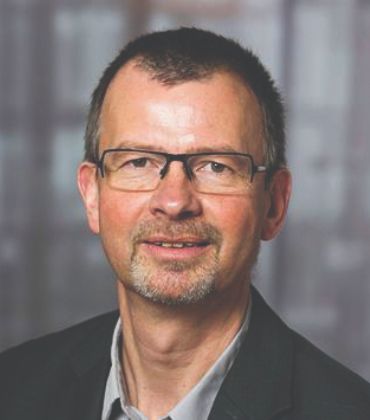
Søren Randrup-Thomsen

Søren Randrup-Thomsen

Resilient Design Steward

Designing large infrastructure projects – bridges, tunnels, ports etc. – includes fulfillment of various requirements from codes and standards to ensure that the structural safety is not compromised and further to ensure that the structure is not disrupted in longer periods. It is however noted that these requirements can be fulfilled in various ways when also cost issues must be considered. Operational Risk Analysis (ORA) is a way to document that safety, availability and financial requirements are all fulfilled when the final design has been chosen, the construction project is finalized, and the bridge is in daily operation.


The risk-based approach has been used for design and construction of the Norwegian Public Roads Administration (NPRA) floating bridge ‘Bjørnafjorden Floating Bridge’ crossing the 500 m deep Bjørnafjord between Stavanger and Bergen–a 5 km long bridge to be built on 38 floating pontoons and a land-based pylon. Floating bridges are quite unusual in bridge design and the structural behavior of the bridge deviates significant from more traditional bridge designs and especially risks related to ship traffic accidents challenges the design. For this reason, the risk-based approach has been used to ensure that selected design alternatives do not pose unacceptable high risks for user safety or for disruption of the bridge. In general, risk analysis covers several activities to be carried out, all aiming at somehow quantifying the considered risk – in this case, safety for users of the bridge and availability of the bridge in operation. The risk activities run through the following procedure.


As seen from the sketched procedure, the operational risk analysis includes identification of hazards – events that under various circumstances will lead to accidents in terms of human injuries/fatalities and/or to a closure of the bridge in a period. Examples are ordinary traffic accidents, truck fires and ship collisions with pontoons or girders. The hazard identification activity must hence cover all imagined types of accidents, why the identification process often includes workshops with experts within various fields.


"By combining the frequency and the consequence for a given hazard, a risk contribution in terms of number of fatalities per year or number of disruption hours per year is estimated"


When hazards are identified the risk analysis part is initiated. This includes analysis of the identified hazards to determine how often the hazard will occur (often based on statistics and presented as occurrences per year) and also modelling of the consequences, if the hazard appears. Consequences will be expressed as number of fatalities or number of down time hours of the bridge given the accident. The consequence modelling part may also be based on statistics but often are more detailed models used (e.g., computational models to estimate fires and toxic releases, structural models to estimate damages due to ship collisions).


By combining the frequency and the consequence for a given hazard, a risk contribution in terms of number of fatalities per year or number of disruption hours per year is estimated.


The final risk is then calculated by summing up all risk contributions and compared to an established risk acceptance criterion. This criterion may be given by national authorities setting the limit for annual number of user fatalities for the considered structure. However, often such criteria are not available and may be set when starting up the project. A commonly used approach is to allow the same number of annual fatalities as seen on comparable projects – or to strengthen requirements just a little to increase safety. When looking at disruption periods this may be more locally determined and depends very much on the traffic patterns close to the bridge and the consequence for the users not being able to use the bridge and hence must take other delaying routes.


The procedure has been applied at the Bjørnafjorden Floating Bridge and gives a fine overview of which hazards contribute to the overall risk and shows if the established acceptance criteria have been violated. This is illustrated below (numbers just indicative for illustration purpose).


The figures above shows that different hazards are dominating the risk depending on the risk type. For human safety traffic accidents contributes the most, whereas ship collisions are the largest contributor to the risk of disruption of the bridge. If it turns out that the overall risk is not acceptable or if specific scenarios contribute significant to the risk, risk reduction should be implemented – that may be increased structural capacity, alternative lane design, access for emergency response, lowering speed limits at the bridge etc.


This risk-based approach is an ongoing activity from the very beginning and over the entire lifetime of the bridge. The procedure assists designers in choosing optimal design, contractors to optimize during construction and operators to ensure that the right maintenance activities and operational rules are in place.


The articles from these contributors are based on their personal expertise and viewpoints, and do not necessarily reflect the opinions of their employers or affiliated organizations.

Editorial Lens

Large infrastructure projects require risk frameworks that address human safety, operational disruption and design feasibility before construction decisions become fixed. Randrup-Thomsen’s perspective shows how systematic hazard identification, consequence modelling and defined acceptance criteria can guide safer, more resilient infrastructure while supporting informed investment and mitigation choices.

The Leadership Perspectives forum brings together voices shaping the construction industry. Participation is by invitation only. It features leaders who are not merely observing industry changes, but actively contributing to them through operational expertise and project execution insights.
EDITOR'S CHOICE
  • Willis Towers Watson

    Deutsche Telekom [ETR: DTE]

    Eliminating The Disappointment of Artificial Intelligence

    Steffen Kuhn,Global Practice Lead Innovation & Special Assets /Head of Digital Engi-neering Center/Managing Partner and Manuela Mackert, Chief Compliance Officers

  • Willis Towers Watson

    Peab [STO: PEAB-B]

    Behavioral Design for Positive Impact: Fostering Diversity and Inclusion in Organizations

    Julia Lundberg, Head of Diversity, Equity and Inclusion,Peab [STO: PEAB-B]

  • Willis Towers Watson

    Unibail-Rodamco-Westfield [Euronext: URW]

    From Groundwork to Growth with Holistic Construction Management

    Moad Ziadi, Project Management Director Europe

  • Willis Towers Watson

    Peab [STO: PEAB-B]

    Behavioral Design for Positive Impact: Fostering Diversity and Inclusion in Organizations

    Julia Lundberg, Head of Diversity, Equity and Inclusion,Peab [STO: PEAB-B]

Construction Business Review
Follow on LinkedIn

About

  • Home
  • About Us

Stay Connected

  • Subscribe
  • Newsletter
  • Sitemap

Contact Us

  • editor@constructionbusinessreview.com
  • sales@constructionbusinessreview.com
  • marketing@constructionbusinessreview.com

Legal

  • Editorial Policy
  • Privacy Policy
  • Terms of Use

© 2026 Construction Business Review. All rights reserved. Headquartered in Fort Lauderdale, FL, USA.

This content is copyright protected

However, if you would like to share the information in this article, you may use the link below:

https://www.constructionbusinessreview.com/leadership-perspective/design-and-operation-of-large-infrastructure-projects-a-risk-based-approach-nwid-2630.html

We use cookies on this website to enhance your user experience. By clicking any link on this page you are giving your consent for us to set cookies. More info

I agree