Thank you for Subscribing to Construction Business Review Weekly Brief

An unstable mine highwall, a rock face above an active railway or critical infrastructure exposed to natural hazards can each present an entirely different challenge. Ground conditions change, access is difficult and operations often cannot simply be interrupted. In geotechnical stabilization, there is rarely a standard solution.
For more than 37 years, BAT Construction has built its reputation by taking on these challenges across Canada. Its approach combines highly experienced people, specialized equipment, self-performed execution and a culture of problem-solving to deliver complex work safely and efficiently.
“We want to be the best at what we do,” says Dan Sims, President. “That means constantly challenging ourselves to be safer, more innovative and better at delivering for our clients.”
Built to Solve Difficult Problems
BAT owns and operates its specialized equipment and self-performs its critical work rather than relying heavily on subcontractors. When commercially available equipment has not provided the capability required, BAT has designed and built its own, including high-reach drilling systems and proprietary horizontal drain hole drilling rigs developed for mine pit stabilization.
That same problem-solving approach extends to project execution. BAT works with clients and engineers to identify constructability issues, improve methodologies and address risks before they affect safety, cost or schedule.
“We don’t want to simply complete a scope and move on,” says Sims. “We want to understand what our client is trying to accomplish, identify where we can add value and become a partner in making the overall project successful.”
Built for Mining and Critical Infrastructure
Mining is a major area of specialization for BAT. Its teams support active mine operations with pit-wall stabilization, horizontal drain hole drilling, rock scaling, drilling and anchoring, shotcrete, natural hazard mitigation, blasting and other specialized geotechnical services.
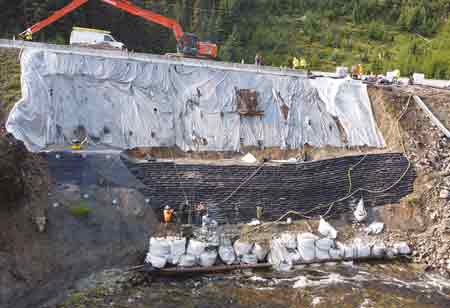 Much of this work occurs in remote locations and difficult terrain where changing geology, access and production requirements demand experienced people and specialized equipment. BAT’s proprietary equipment demonstrates how the company develops capabilities specifically around the challenges its clients face.
That experience extends across critical infrastructure throughout Canada. Having worked from Vancouver Island to Newfoundland, BAT’s teams have encountered widely varying geology, climates and access conditions. That experience helps them anticipate problems, develop contingencies and adapt when conditions differ from expectations.
On one CPKC project, BAT encountered a large unstable rock structure above an active railway where prolonged interruption to operations was not an option. BAT protected the tracks with blast mats and soil bags and coordinated the work around a scheduled shutdown. Within the available two-hour window, the rock mass was safely brought down, the slope secured, the tracks cleared and railway operations restored.
The project reflects a principle central to BAT’s approach: understand the problem first, then build the solution around the site or conditions.
-
We want to build the best geotechnical construction company in the industry.
The project reflects a principle central to BAT’s approach: understand the problem first, then build the solution around the site or conditions.
Safety, People and Continuous Improvement
Safety is BAT’s first core value and is non-negotiable. Its HSE systems, competency programs, specialized training and IRATA-certified rope-access capabilities support work in some of Canada’s most demanding environments.
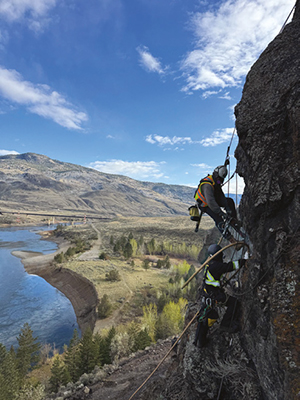 BAT fosters a culture where employees carefully identify hazards and stop and speak up if something isn’t right. When conditions change, work is reassessed and the appropriate experience and controls are verified before proceeding.
BAT regularly reviews project performance, client feedback and lessons learned and incorporates them into its procedures, future planning and project execution. This commitment to continuous improvement supports its five core values of Safety Driven, Integrity, Quality, Flexibility and Team Spirit.
Ultimately, BAT considers its people and culture its greatest competitive advantage.
“Equipment and technology are important, but the experience, judgment and attitude of the people using them are what make the difference,” says Sims. “We want people who take pride in their work, look after each other and want to become exceptional at what they do.”
For employees, that means opportunities to build careers working on technically challenging projects across Canada while developing specialized skills and progressing into technical, supervisory and leadership roles.
Raising the Standard
BAT continues to invest in its future, expanding its Ontario operations, developing a new facility in Kamloops and adding specialized drilling capacity, including additional proprietary horizontal drill rigs.
“We want to build the best geotechnical construction company in the industry,” says Sims. “That means attracting exceptional people, developing leaders, continually improving how we operate and investing in the capabilities our clients will need tomorrow.”
For BAT, growth is not the objective on its own. The goal is to continue raising the standard for its clients, its people and the geotechnical construction industry.
Assessing Constructability and Execution Risk in Slope Stabilization
Slope stabilization work becomes difficult long before drilling starts. Access may be limited and ground conditions can change over short distances. Construction may also have to proceed beside active roads or rail corridors while mine infrastructure remains in service nearby. A contractor may receive an engineered design yet still face a site where the planned sequence cannot be built safely or efficiently. The buying question is therefore less about whether a firm can install a specified system and more about whether it can recognize constructability problems early enough to prevent field delays.
Site interpretation carries much of that burden. Soil profiles and fractured rock can change drilling methods, while groundwater behavior and slope geometry can alter the order in which work proceeds. Contractors who have worked across varied terrain are better placed to identify conditions that deserve contingency planning before mobilization. That judgment matters when shutdown windows are narrow or when access equipment cannot be repositioned easily once work begins. A useful partner should be able to test the design against field reality and explain where execution risk sits. It should also be prepared to adjust the approach without losing control of the engineering intent.
Mobilization deserves equal scrutiny. Remote slopes can turn a minor equipment limitation into lost shifts when replacement machinery or specialist labor must travel long distances. Buyers should ask whether crews can draw on equipment and personnel from more than one location and whether the contractor has a practical plan for reaching steep or confined work areas. Fast arrival alone is not enough. The crew still needs the right drill configuration and an agreed fallback when ground conditions differ from the investigation.
Execution control matters just as much. Slope work may combine specialized drilling with rope access, scaling and mesh installation, alongside shotcrete where required. Splitting critical portions among several subcontractors can add coordination points and make responsibility harder to trace when conditions change. Buyers should examine how much of the scope is self-performed and whether crews work under consistent procedures. Equipment ownership also matters when standard rigs cannot reach the required drilling angle or work efficiently in confined terrain.
“BAT Construction works through constructability concerns before execution, using field experience to flag risks and prepare contingencies.”
Safety discipline is another practical test because difficult access leaves little room for improvised decisions. Strong contractors give field crews clear stop-work authority and back that authority with experienced supervision. Procedures should also change when near misses or field feedback expose a weakness. Training credentials alone do not resolve every hazard. What matters is whether crews have a repeatable way to pause unfamiliar work, bring in the right expertise and choose a safer method before production resumes.
BAT Construction fits this buying logic closely. It self-performs critical stabilization work and designs specialized drilling equipment for demanding access conditions. Its service scope includes anchor retaining systems, slope mesh systems, horizontal drain hole drilling and rope access work. The company works through constructability concerns before execution, using field experience to flag risks and prepare contingencies. For buyers managing difficult slopes where access constraints and drilling geometry can shift quickly, BAT Construction merits close consideration.
...Read more
Slope and Geotechnical Stabilization Services in Canada Info
Q1
What Do Slope and Geotechnical Stabilization Services in Canada Typically Cover?
Slope and geotechnical stabilization services in Canada address unstable rock, soil, steep terrain, groundwater pressures and natural hazards that can threaten infrastructure or active worksites. The work may include anchoring, retaining systems, slope mesh, scaling, shotcrete, grouting, drainage, rockfall protection and other remediation measures. For buyers, the value of slope and geotechnical stabilization services in Canada lies in matching the stabilization method to actual ground conditions, access constraints and long-term performance requirements.
Q2
How Does BAT Construction Approach Difficult Geotechnical Stabilization Work?
BAT Construction brings more than 37 years of field experience and keeps key execution work in-house. It owns much of the specialized equipment used on its projects and has designed high-reach drilling systems and proprietary horizontal drain hole drilling rigs for mine-pit stabilization. Within slope and geotechnical stabilization services in Canada, this gives crews more control over sequencing and adaptation when geology or access shifts. BAT also reviews constructability and execution risks with clients and engineers before field work begins.
Q3
What Factors Matter When Selecting a Slope Stabilization Contractor?
A capable contractor should be evaluated on field judgment, safety controls, access planning, equipment suitability and the ability to respond when ground conditions differ from expectations. Slope and geotechnical stabilization services in Canada often involve variable geology and restricted work zones, so execution planning matters as much as the specified system. Buyers should also examine whether key work is self-performed, how contingencies are developed and whether the contractor can maintain engineering intent while adjusting construction methods in the field.
Q4
How Do Stabilization Services Help Protect Infrastructure and Active Worksites?
Before loose rock, slope movement, groundwater, or debris threatens highways, rail routes, mines, and other vital assets, stabilization work helps control hazards. To address site-specific risks, Canadian slope and geotechnical stabilization services can combine techniques like anchors, mesh systems, drainage, scaling, and shotcrete. Installing a product is only one aspect of effective slope stabilization; another is comprehending the interactions between topography, loading, water, and access to ensure that preventive measures are reliable both during construction and after.
Q5
Where Does BAT Construction Apply Specialized Stabilization Capabilities?
BAT Construction applies its capabilities in mining and critical infrastructure settings, often in difficult terrain. Its documented work includes pit-wall stabilization, horizontal drain hole drilling, rock scaling, anchoring, shotcrete, blasting, natural-hazard mitigation and rope-access operations. Projects have taken its crews across Canada, and its rope-access program uses IRATA-certified personnel. These capabilities place its work within slope and geotechnical stabilization services in Canada, particularly where conventional access, standard drill configurations or routine construction sequencing may not suit site conditions.
Q6
Why Do Slope and Geotechnical Stabilization Services in Canada Require Strong Field Judgment?
In Canada, slope and geotechnical stabilization services often face quickly changing site conditions. Once work begins, drilling methods, work order, or access plans might need to change because of soil, fractured rock, groundwater, or slope shape. Skilled workers need to spot these changes early, pause to reassess when needed, and pick the safest and most effective techniques. Good field judgment also helps with practical backup plans, especially when there are tight schedules, remote sites, or limited equipment.
