Thank you for Subscribing to Construction Business Review Weekly Brief
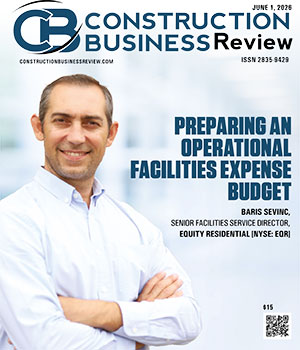
As a facilities professional, one of the key responsibilities is to ensure the smooth operation of the facility within the allocated budget. One crucial aspect of this is preparing a realistic operational facilities expense budget. A well-planned and comprehensive budget not only helps in managing costs effectively but also ensures that all necessary expenses are accounted for. I summarized the steps I learned throughout the years in preparing an operational facilities expense budget. Gather Information: The first step in preparing an expense budget is to gather all the necessary information. This includes reviewing past budgets, analyzing historical data, and consulting with relevant stakeholders. By understanding the facility's past expenses and future requirements, you can make informed decisions while creating the budget. Reviewing current contracts and the expiration dates will also give you an opportunity to renegotiate pricing "With a well-planned budget in place, you can successfully navigate the financial aspects of facility management" Identify Expense Categories: Next, you need to identify the different expense categories that are relevant to your facility. Common expense categories include preventative maintenance contracts, maintenance and repairs, cleaning services, security, and supplies. By categorizing expenses, you can ensure that all aspects of facility management are covered in the budget.
Doors and windows
RJP Construction is a Mountain West commercial wood framing contractor founded in 1995 and licensed across multiple western states. Offering an integrated suite of services including commercial framing, crane operations, timber fabrication, prefabrication, and layout planning, RJP delivers turnkey framing solutions for complex commercial projects with a focus on early coordination, quality execution, and long-term client relationships.

Construction Law

What legal requirements most influence construction dispute outcomes within Nevada’s contractor industry today? Strict mechanics lien, licensing requirements and prompt payment govern construction law in Nevada and shape dispute outcomes. Sarah A Mead & Associates has built its practice around these constraints, emphasizing lien-related matters. It represents contractors and industry stakeholders in disputes and regulatory challenges where legal requirements intersect with project execution. The practice reflects the experience of Sarah Mead, managing attorney and founder. With nearly 12 years in construction law, she shapes matters involving licensing processes and dispute resolution. Her approach combines legal analysis with working knowledge of construction processes, including schedules, permitting and contract execution, alongside understanding project roles and relationships. “The most important thing for me is maintaining transparency and frequent communication, ensuring clients are involved throughout the entire process,” says Mead.
Building Restoration and Maintenance

In today’s construction environment, exterior cladding systems have become more complex than ever. Evolving building codes, performance requirements and manufacturer standards demand a level of coordination that most projects struggle to achieve. For general contractors and developers, the challenge isn’t just installing materials—it’s ensuring every component works together as a complete system. This is where DM Construction separates itself. DM Construction has built its reputation as a subject matter expert in exterior cladding systems, specializing in masonry, plaster, EIFS, waterproofing, insulation and integrated envelope solutions. By delivering these scopes under a single contract, the company eliminates the fragmentation that often leads to schedule delays, cost overruns and warranty risk. At its core, DM Construction’s value lies in its ability to understand and execute complex systems from design through completion. The team engages early in the process, often during preconstruction, to analyze drawings, identify system interactions and ensure budgets align with real-world installation requirements. Every detail is evaluated, from how materials interface to how transitions, penetrations and environmental conditions impact long term performance. This level of planning is not theoretical; it is built into DM’s internal processes. Over years of project experience, the company has developed structured estimating and execution models that account for every component required to complete a system in accordance with code and manufacturer standards. These processes reduce risk, protect warranties and ensure that what is designed can be built efficiently in the field. Execution is where that planning is proven. DM Construction maintains a high standard of craftsmanship and field performance, supported by continuous training and certification across its workforce. Crews are trained through industry organizations and manufacturer programs, ensuring alignment with the latest installation methods and performance requirements. Safety is equally embedded in operations, with OSHA-certified teams, daily reporting and ongoing oversight that reinforces accountability on every project. This combination of process, training and field discipline allows DM to deliver high-end exterior systems at scale consistently.
Construction Consulting

Navigating the Landscape of Retail Project Management: Strategies for Success
T.J. McKeever, Senior Project Manager, Brixmor Property Group [NYSE: BRX]
Building Envelope Consulting

The Gardens Of Monticello
Scott Lewis, Senior Project Manager, MMR Group
Pre-Construction Services

Building on Solid Ground: Managing Credit Risk in the Construction Industry
Don P. Orcherton, Director of OTC Credit & Collections, National Trench Safety
Roofing and Siding Systems

Over Reliance on Manufacturers When it Comes to Design
Corey Zussman, QAQC Vice President, AECOM Hunt
Commercial Contractors

Unraveling the Dynamics of Commercial Real Estate: Navigating a Changing Landscape
Dylan Sproul, Senior Vice President, Transwestern
Building Restoration and Maintenance

Finding the Right Executive Search Partner: Beyond the Placement
Joe Krautkramer, Executive Director of Human Resources, Tweet Garot Mechanical Construction

IN MY OPINION
Construction Engineering Services
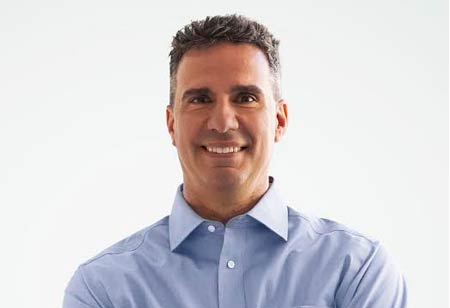
How LEGO Is Transforming Facilities into Engines of Innovation
Nat Shanks, Director of Facilities, The LEGO Group
LAST WORD
Flooring System
Aluminum Framing Supports Well-being and Sustainability in Healthcare and Education Sectors
Chris Giovanelli, Risk Management Specialist, Kawneer Company, Inc
IN FOCUS

Architectural Design Essentials: Crafting Aesthetic and Functional Spaces
Architectural design enhances aesthetic appeal, improves comfort and safety, and fosters innovation.
Remodeling for a Better Living: Benefits of Upgrading Kitchens and Bathrooms
Remodeling kitchens and bathrooms enhances the overall value of a home, providing a significant return on investment.
EDITORIAL
Building Through Coordination and Accountability
Construction today is being shaped by growing project complexity, stricter performance demands and higher expectations around durability, coordination and long-term efficiency. This edition of Construction Business Review looks at how leading firms are responding with more integrated execution, careful planning and technical know-how that helps reduce risk and deliver better project outcomes.
DM Construction is recognized for its systematic and rigorous methodology in the execution of commercial masonry and restoration work in demanding surroundings, earning it the Top Commercial Construction and Restoration Services 2026. It is a proficient collaborator on projects requiring endurance and high quality craftsmanship.
This issue also introduces RJP Construction, selected as Top Commercial Wood Framing Company 2026. Its proactive approach, involving their input from preconstruction to the completion of the project and coordinating framing, crane services, timber fabrication and prefabrication within one entity, has developed a plan aimed at decreasing downstream risks in complex commercial projects.
Sarah A Mead & Associates, awarded for Top Construction Law Firm 2026, demonstrates the growing value of legal and regulatory expertise in modern construction. Its contractor-focused approach to dispute resolution, licensing and mechanics lien matters reflects the growing complexity of project execution, compliance and payment arrangements.
Corey Zussman, QAQC Vice President at AECOM Hunt, discusses the dangers of relying solely on minimum code and warranty requirements. Chris Giovanelli, Risk Management Specialist at Kawneer Company, Inc. looks at material selection and how it’s transforming the next-generation of spaces by exploring aluminum framing systems for energy efficiency, occupant health and long-term cost savings for healthcare and learning facilities.
Together, the organizations and leaders featured in this edition reflect an industry increasingly defined by coordination, technical depth and long-term thinking. We invite readers to explore the insights throughout this issue and examine how construction leaders are building more resilient, efficient and accountable project environments for the future.
